

Stark Draper, University of Toronto
Tutorial title: “Casting Error-Correction Decoding as a Convex Optimization Problem, and Building Efficient Solvers”
Abstract
In the first part of this tutorial talk we show how to cast a relaxed version of maximum likelihood (ML) decoding as a large-scale linear program (LP). We explain the geometry and the failure models (the “pseudo codewords”) of the resulting LP. In the second part of the talk, we develop a method to solve this relaxation in an efficient and parallelizable manner by applying the alternating direction method of multipliers (ADMM). The core technical innovation is a novel characterization of the parity polytope, the fundamental convex object of interest in relaxations of the single-parity-constraints used to describe, e.g., low-density parity-check (LDPC) codes. We conclude by compare decoding results to those from belief propagation, describe variants of the core idea that improve performance, detail a fixed-point implementation in a field-programmable gate array (FPGA), and describe some extensions beyond binary linear codes.

Warren Gross, McGill University
Tutorial title: “Polar Decoders in Silicon: From Algorithms to Architectures”
Abstract
Polar codes are the first class of error-correcting codes proven to achieve channel capacity with manageable computational complexity. With their adoption for control channels in 5G wireless communications, research has pivoted toward efficient hardware implementations capable of meeting the stringent constraints of modern communication systems. This tutorial presents an overview of the key techniques addressing hardware bottlenecks in polar code decoders from efficient scheduling techniques to optimized decoding accelerators. The tutorial will discuss hardware architectures for both successive cancellation (SC) and successive cancellation list (SCL) decoding, tracing the evolution from early foundational designs to the state-of-the-art implementations.

Sergey Loyka, University of Ottawa
Tutorial title “Massive MIMO: From Antenna Array to Information Theory”
Abstract
Antenna arrays play a prominent role in modern wireless communication systems, but this did not happen overnight. We begin this tutorial by tracing the historical roots, from Marconi to Marzetta, and observe a paradigm shift around 1995: while earlier progress was dominated by antenna/RF engineers, they overlooked something. This was discovered by information theorists and they quickly took over. As a result, most modern wireless systems, if not all, have multi-antenna (MIMO) architecture, in one form or another. What is more surprising, even wired systems do so.
In this tutorial, we will emphasize elegant results, insights and understanding rather than numerous technicalities. The topics will include traditional antenna arrays and their role, SIMO/MISO, MIMO and massive MIMO systems, and the role played by information theory in bringing up the latter topics. Fundamental principles will be highlighted and some practical aspects, such as the impact of constraints (power, interference and secrecy) as well as channel uncertainty, will also be discussed.
We will also mention some dead ends encountered on this long journey as a lesson for future.
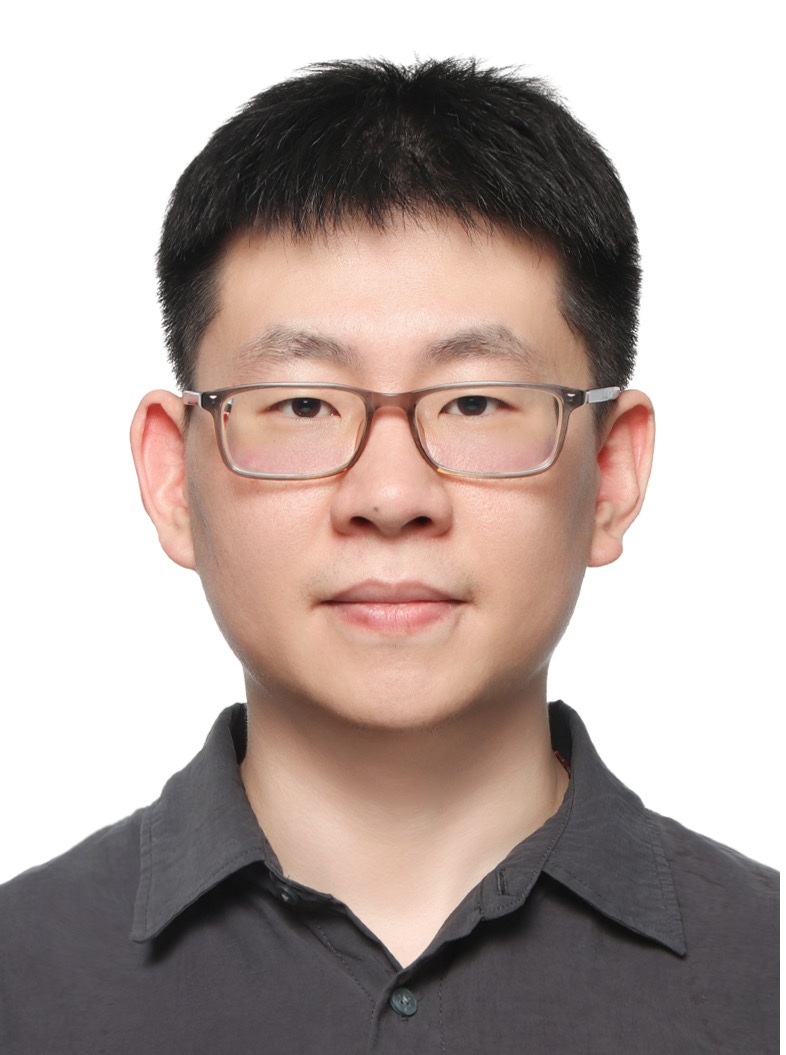
Ziqiao Wang, Tongji University
Tutorial title: “Information-Theoretic Analysis for Generalization of Learning Algorithms”
Abstract
Information-theoretic generalization analysis provides a principled framework for understanding how learning algorithms depend on training data and why such dependence affects test performance. This tutorial reviews the development of information-theoretic generalization bounds, starting from classical input-output mutual information bounds that quantify the dependence between the learned hypothesis and the training sample, and then moving to more refined notions such as individual mutual information, random-subset bounds, and conditional mutual information based on the supersample framework. We will discuss how these developments overcome key limitations of early mutual information bounds, including looseness and divergence for deterministic algorithms. The tutorial will also cover algorithm-dependent bounds for stochastic optimization methods, with a focus on stochastic gradient Langevin dynamics and stochastic gradient descent, illustrating how information-theoretic quantities can be related to gradient noise, stability, and sharpness along the training trajectory. Finally, we will briefly discuss recent uses of mutual information as a measure of memorization and information capacity in modern large language models, highlighting how classical information-theoretic tools continue to provide useful perspectives for understanding contemporary learning systems.